Showing posts with label memory. Show all posts

Monday, December 3, 2007

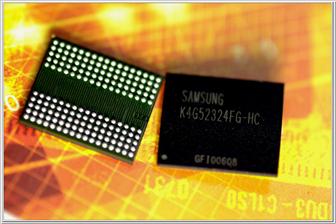
Samsung announces world's fastest memory: GDDR5


Samsung Electronics has announced that it has developed the world's fastest memory, a GDDR5 (series five, graphics double-data-rate memory) chip that can transfer data at six gigabits per second (Gbps).

Samsung's GDDR5, which will be introduced at a density of 512 Mb (16Mb x 32) chips, is capable of transmitting moving images and associated data at 24 gigabytes per second (GBps).

The new Samsung graphics memory operates at 1.5 volts, representing an approximate 20% improvement in power consumption over today's most popular graphics chip, the GDDR3.

Samples of Samsung's new GDDR5 chip have been delivered to major graphic processor companies last month and mass production is expected in the first half of 2007.

Samsung expects that GDDR5 memory chips will become the de facto standard in the top performing segment of the market by capturing more than 50% of the high-end PC graphics market by 2010.

Source

Tuesday, November 13, 2007

Eye-Fi: First Wireless Memory Card for Digital Cameras


Now here's a great idea. Take a normal-looking 2GB SD card. Add a
wireless chip to it. Stick the whole thing into your camera, and before
you know it you've got a wireless camera. Now add a dose of software
smarts onto the SD card to manage the whole thing and what do you get?
You get a quick wireless ticket straight from your camera to any one of
17 different social networks or photo-sharing sites including Facebook, blogging sites like TypePad, photo-sharing sites like Flickr and Snapfish,
or your PC or Mac. If you've been lamenting how your photos never seem
to make it out of the camera, lament no more. The price? $99.99 with
2GB of storage (about 1,000 photos).

I caught up with Jef Holove, CEO of Eye-Fi,
shortly after this product was announced. He shed some additional light
on how stuff works behind the scenes. The card has everything,
including the software necessary to get you up and running. All you
need to do is tell the card which service you want your photos sent to.
It also archives the photos on your PC or Mac. And while you can belong
to multiple services, you can't send your photos to more than one at a
time. Currently the card supports JPEG files only, but transmits photos
without any degradation in resolution. It will resize the photos if the
online destination requires it.

Holove says, "Digital cameras
made it extremely easy to take pictures, but the rest of the process is
a hassle." Wireless, he says, will make things much easier. We'll have
a review unit momentarily and report back, but this sounds like a
winner.

Source